

Protect Your Dealership. Know Your Suppliers. Understand the Risks.
When choosing golf carts to sell, dealers naturally focus on product quality, pricing, profit margins, and customer demand.
However, there is another factor worth considering: intellectual property protection.
Golf cart manufacturers invest significant resources in developing new designs, storage systems, and functional features. Some of these innovations are protected by U.S. patents. Selling a product that infringes another company’s patent can create legal and financial risks that extend beyond the manufacturer.
For dealers, understanding these risks is an important part of making sound business decisions.

Why Patent Protection Matters in the Golf Cart Industry
Competition encourages manufacturers to develop better products. At the same time, patent law provides protection for qualifying inventions and designs.
In the golf cart industry, patents may cover functional innovations, such as storage mechanisms and mounting systems, as well as ornamental vehicle designs.
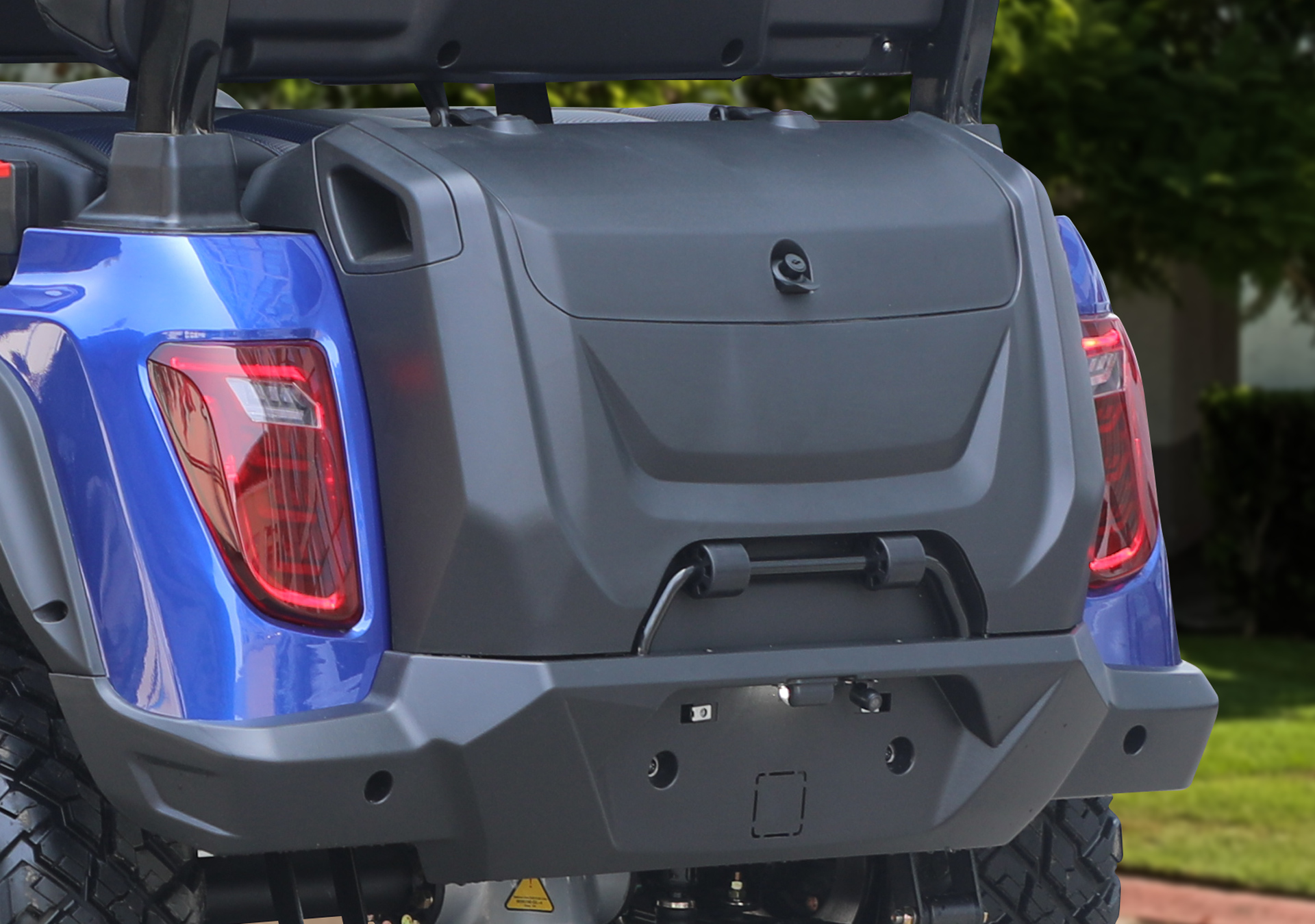
Evolution, for example, has invested in patented innovations designed around the needs of personal golf cart owners, including:
- Foldable rear storage basket
- Sliding cooler tray system
- Multi-golf-bag holding system
- Distinctive vehicle designs
These developments represent engineering work, investment, and product differentiation. Patent protection helps establish legal rights over the inventions and designs covered by the applicable patents.
For dealers, the takeaway is straightforward: a product’s features and selling price are not the only factors worth evaluating before adding it to your inventory.
Can Selling an Infringing Product Create Legal Risks?
Yes. Under U.S. patent law, unauthorized selling or offering for sale of a patented invention can constitute infringement, depending on the patent claims and the circumstances.
A dealer does not necessarily avoid all liability simply because another company manufactured the product.
Potential consequences, if infringement is established, may include:
1. Sales Restrictions
A patent owner may seek a court order to stop infringing sales.
If an injunction is granted, affected products may no longer be sold as planned. This can disrupt inventory management, marketing campaigns, customer orders, and future purchasing commitments.
For a dealership, even a temporary sales disruption can affect revenue and customer relationships.
2. Financial Exposure
Patent litigation can involve substantial legal expenses and potential monetary damages.
Depending on the circumstances, a court may award damages for infringement. In qualifying cases, damages may be increased under U.S. law.
The specific liability of a dealer depends on the facts, applicable legal standards, and the outcome of the dispute. Not every patent allegation results in liability.
Nevertheless, dealers should recognize that intellectual property disputes can become significant business risks.
3. Inventory and Business Disruption
Dealers may commit substantial capital to purchasing, transporting, marketing, and stocking vehicles.
If a product becomes subject to a sales restriction or a broader supply disruption, the dealer may need to reassess inventory plans and customer commitments.
The actual consequences depend on the scope of the dispute and any applicable court orders or agreements.
4. Reputation and Customer Confidence
Dealers build their businesses on trust.
Customers expect the products they purchase to be supported by a reliable manufacturer. If a product line becomes involved in a significant legal dispute, customers may ask questions about availability, service, replacement parts, and future support.
Even when a dealer had no role in product development, managing these concerns can consume time and resources.
Buying From a Manufacturer Does Not Eliminate Every Risk
A common assumption is that if a manufacturer offers a product for sale, the dealer can sell it without worrying about intellectual property.
That assumption is not always safe.
A supplier’s decision to manufacture or sell a product does not, by itself, establish that every relevant patent right has been cleared or licensed.
Dealers should therefore consider reasonable supplier due diligence, particularly when a product includes distinctive designs or specialized functional features.
Before adding a new product line, consider asking:
- Does the manufacturer own or license the relevant technology?
- Can the supplier provide appropriate intellectual property assurances?
- Is there documentation supporting claims about patented features?
- Does the manufacturer have an established parts and service support system?
- How would the supplier handle a credible intellectual property challenge?
These questions are not an accusation against any manufacturer. They are part of responsible business evaluation.
What If a Competitor’s Product Looks Similar?
Similar appearance alone does not establish patent infringement.
Different manufacturers may independently develop comparable products. They may also have licenses or other authorization to use protected technology.
Patent infringement depends on the scope of the relevant patent claims, the product’s features, and applicable law.
If a dealer receives a credible notice concerning a product it sells, the appropriate response is to seek clarification from the supplier and consult qualified intellectual property counsel when necessary.
Dealers should avoid making public allegations without adequate evidence and legal review.
Why Established Innovation Matters
Manufacturers that invest in engineering and original product development help move the industry forward.
Patented innovations can create meaningful differences in functionality, convenience, and design. They also reflect the investment required to bring new solutions to market.
At Evolution, our patented storage systems illustrate this approach. From flexible cargo storage to a sliding cooler tray and a system designed to accommodate multiple golf bags, these innovations address practical needs faced by personal golf cart owners.
We believe that protecting original innovation is an important part of building a sustainable and competitive industry.
Protect Your Dealership with Informed Decisions
A successful dealership depends on more than competitive pricing.
Supplier reliability, parts availability, product quality, customer confidence, and legal awareness all contribute to long-term success.
Before committing to a product line, take time to understand the manufacturer behind it and the rights associated with its technology.
Protecting your business starts with knowing what you sell—and asking the right questions before you buy.
Legal disclaimer: This article provides general educational information about U.S. patent law and is not legal advice. Patent infringement is a fact-specific legal determination. No allegation is made that any particular third-party product or manufacturer infringes an Evolution patent. Dealers should consult qualified intellectual property counsel regarding specific concerns.