
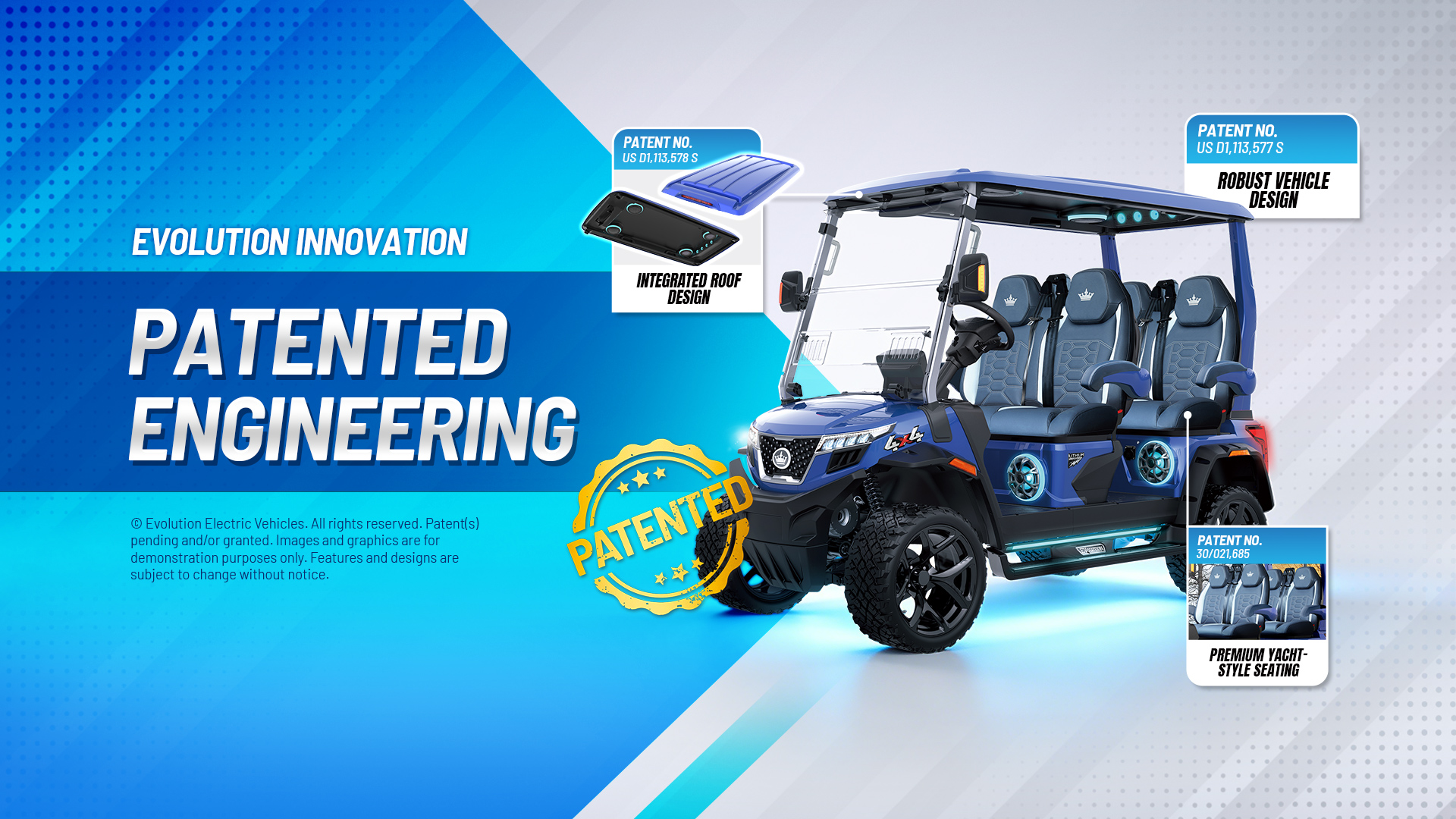

Look Beyond the Price Tag. Consider the Company Behind the Cart.
When shopping for a golf cart, it’s natural to compare prices, features, appearance, battery performance, and warranty coverage.
But there is another factor worth considering: the manufacturer behind the product and its approach to innovation.
Today’s golf carts offer increasingly advanced designs and features. Some of these innovations are protected by patents, which give their owners specific legal rights.
If a product is found to infringe another company’s patent, the consequences may extend beyond the companies involved. For consumers, the practical concerns can include product availability, long-term support, and confidence in the purchase.
Here’s what you should know before buying.
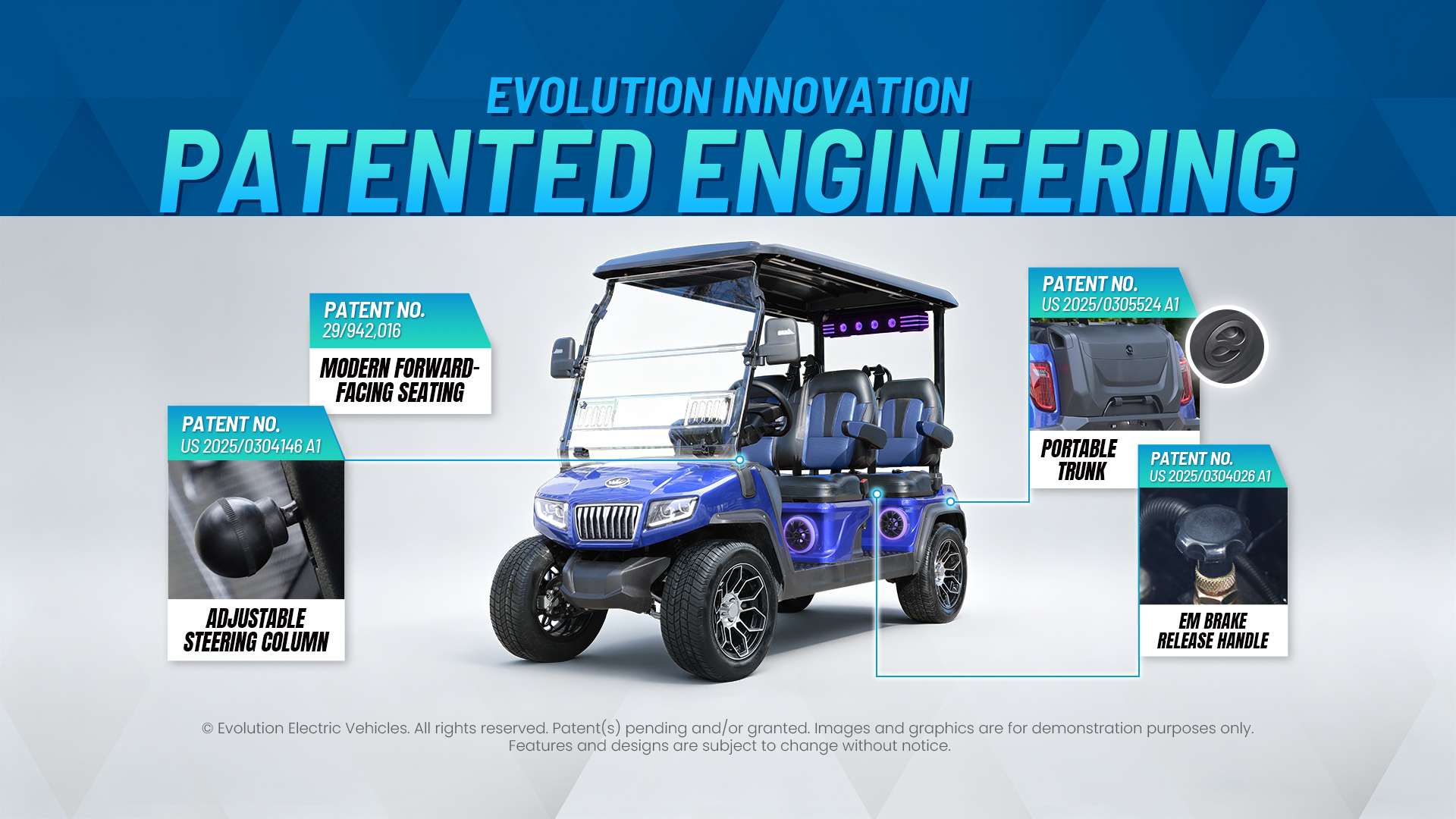
What Is a Golf Cart Patent?
A patent protects qualifying inventions or designs under applicable law.
In the golf cart industry, patents may cover functional features, such as mechanisms and storage systems, or ornamental aspects of a vehicle’s appearance.
Manufacturers may invest considerable time and resources in developing these innovations.
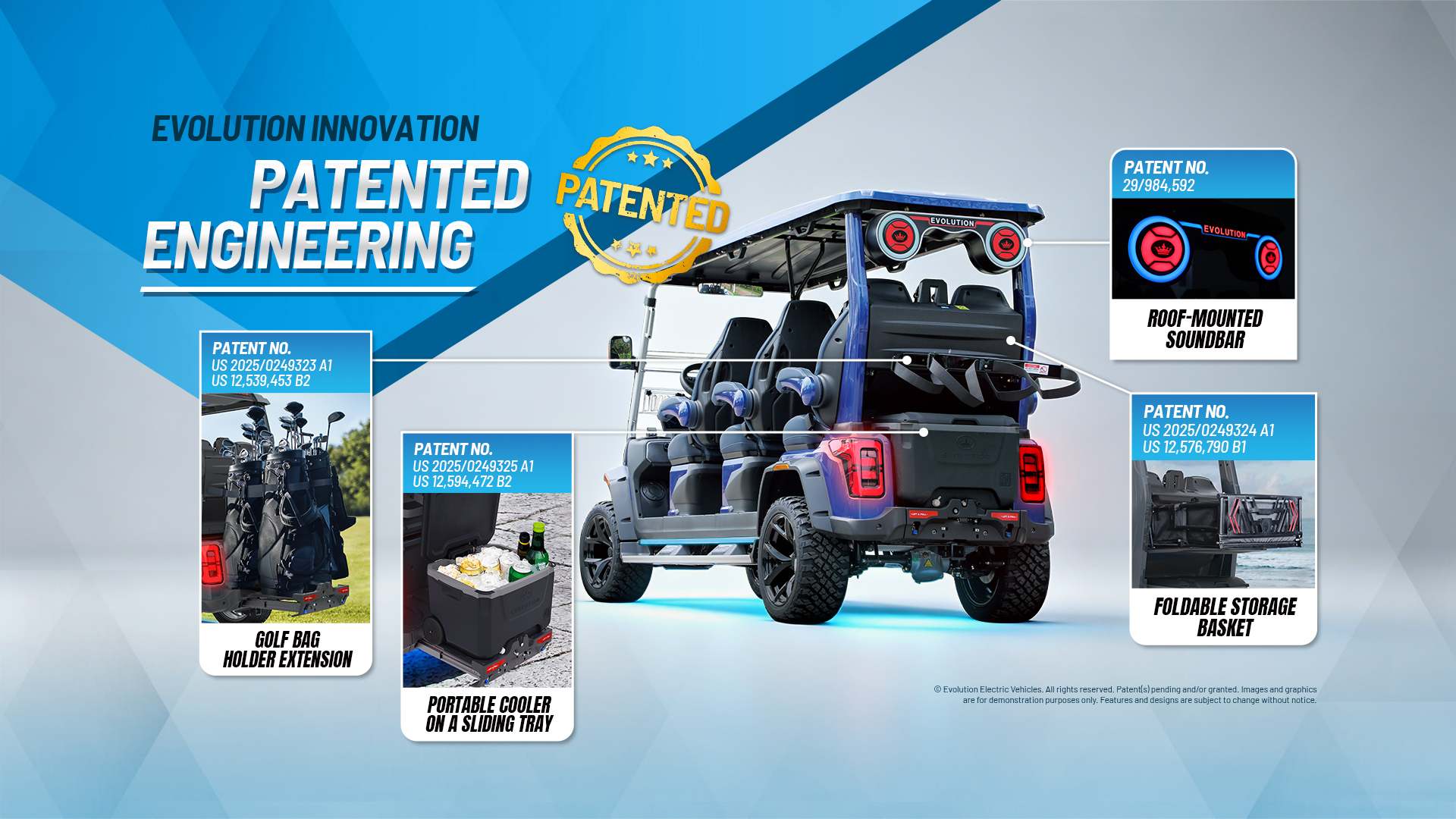
For example, Evolution has developed patented features including a foldable rear storage basket, a sliding cooler tray system, and a multi-golf-bag holding system, etc.
These features are examples of how engineering can address everyday needs, from carrying refreshments to making better use of available cargo space.
Why Should Buyers Care About Patent Issues?
Most consumers do not need to investigate patent law before every purchase.
However, it is useful to understand that a product’s availability on the market does not necessarily prove that every aspect of its design or technology is free from intellectual property concerns.
If a manufacturer becomes involved in a significant patent dispute, the outcome may affect how the product is made, marketed, or sold.
That does not mean every patent dispute will affect customers. It means that a manufacturer’s stability and long-term support are worth considering when making a major purchase.
Could the Product Become Unavailable?
If a court restricts the sale of a product found to infringe a patent, the manufacturer or its sellers may need to stop selling the affected product.
Depending on the circumstances, this could affect future availability or the range of products offered.
For consumers who are considering a new purchase, this is one reason to look beyond the immediate deal and consider the company’s ability to support its product line.
Could Parts and Accessories Become Harder to Find?
Golf carts need maintenance, replacement parts, and occasional repairs.
If a manufacturer experiences significant legal or business disruption, its ability to supply certain parts or accessories could be affected.
This is not an automatic consequence of a patent dispute. However, it is a reasonable consideration when evaluating a manufacturer’s long-term support capabilities.
Before buying, ask whether the company has an established dealer network, accessible replacement parts, and a clear service process.
Could Your Cart’s Resale Value Be Affected?
A golf cart’s resale value depends on several factors, including condition, demand, brand reputation, and parts availability.
If a product becomes associated with significant legal uncertainty, some future buyers may become more cautious.
That could influence market confidence, although no specific change in resale value can be assumed.
For a product you expect to own for years, the manufacturer’s reputation and support network deserve consideration alongside the purchase price.
Does a Similar Design Mean a Product Is Illegal?
Not necessarily.
Two products can look similar without one infringing the other’s patents. Manufacturers may independently develop comparable features, obtain licenses, or use designs that fall outside the scope of a particular patent.
Patent infringement is a legal determination based on the relevant patent claims and the facts.
Consumers should therefore be cautious about drawing conclusions from appearance alone or relying on unverified online allegations.
The goal is not to assume wrongdoing. It is to make informed purchasing decisions.
What Should You Check Before Buying?
You do not need to become a patent expert to choose a golf cart responsibly.
Instead, consider a few practical questions:
Is the manufacturer established?
Look at its history, dealer network, and ability to support the vehicles it sells.
Are parts and service readily available?
Ask your dealer about replacement parts, authorized service, and warranty support.
Does the manufacturer invest in product development?
Look for evidence of engineering, meaningful product improvements, and original innovations.
Can the company explain its product claims?
If a feature is advertised as patented, the manufacturer should be able to provide accurate information about the relevant patent.
Are you choosing on price alone?
A lower price may be attractive, but long-term support and product confidence also contribute to value.
Innovation Makes a Difference
The best product improvements often solve everyday problems.
A better storage system can make a golf cart more practical. A well-designed mechanism can make equipment easier to access. A distinctive design can improve the overall ownership experience.
These developments require investment in research, design, and engineering.
Patent protection helps safeguard qualifying innovations and supports a marketplace in which manufacturers can benefit from their development work.
At Evolution, our patented innovations reflect our commitment to developing practical features for personal golf cart owners.
We believe consumers benefit when manufacturers continue to invest in original ideas and meaningful product improvements.
Choose With Confidence
Buying a golf cart is about more than finding the right price.
It’s about choosing a vehicle that fits your needs and a manufacturer you can rely on for the years ahead.
Consider the product’s quality, the dealer’s support, the availability of parts, and the manufacturer’s commitment to innovation. If credible concerns arise about a product’s intellectual property rights, seek reliable information rather than relying on rumors.
An informed buyer looks beyond what a golf cart offers today—and considers who will stand behind it tomorrow.
Legal disclaimer: This article provides general educational information about U.S. patent law and is not legal advice. Patent infringement is a fact-specific legal determination.