
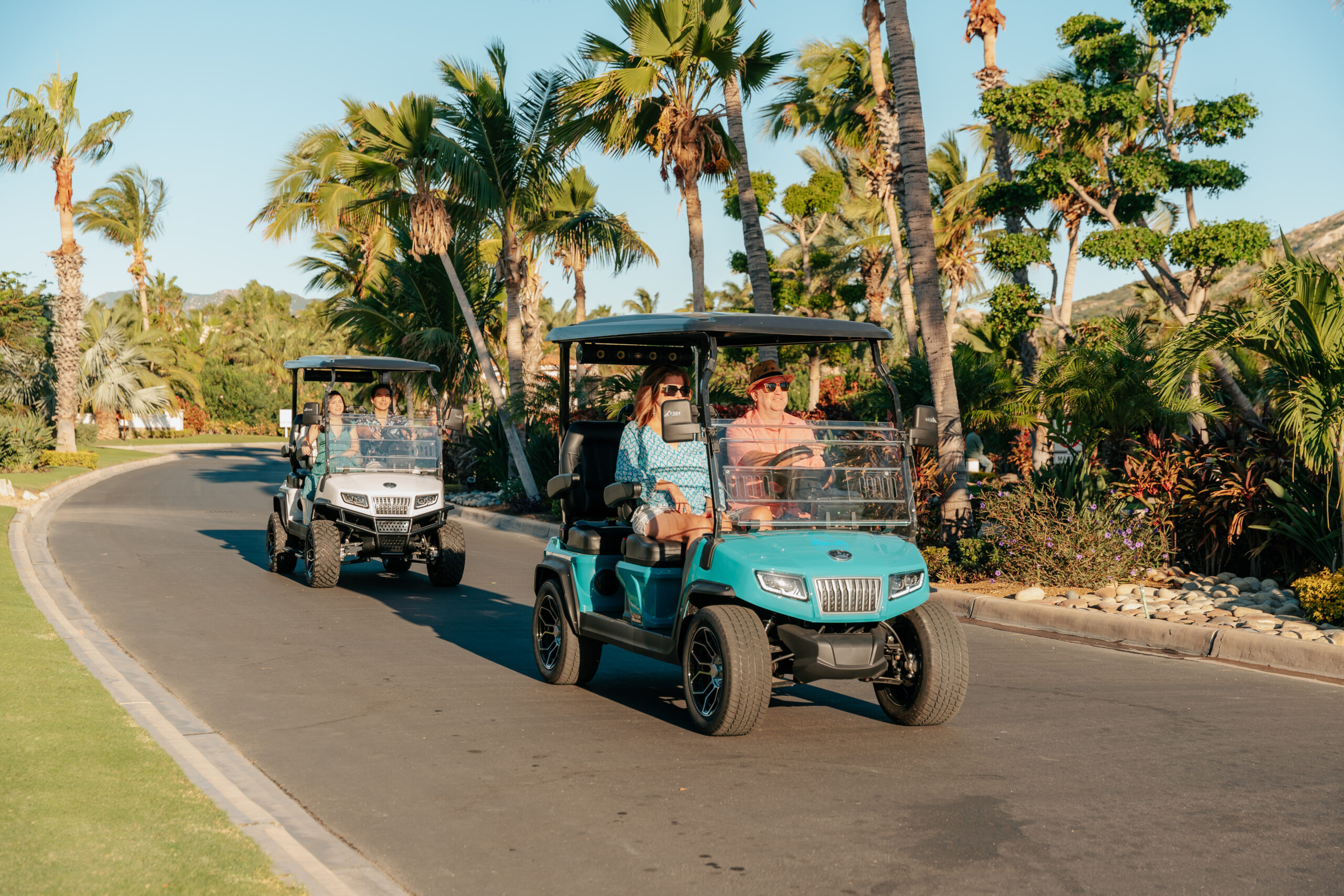

There is something subtle but alarming has crept into American social life: people are simply socialising less, especially in informal, spontaneous settings. The decline is especially stark among younger cohorts, who attending far fewer parties and gatherings with friends.
Why does this matter? Because social interaction is more than just fun — it’s a cornerstone of mental wellbeing, civic cohesion, and community resilience. As in-person gatherings shrink, we risk eroding trust, empathy, and a sense of belonging. In extreme cases, people can feel isolated or alienated, even when digitally “connected.”
In this light, products or technologies that nudge us toward more face-to-face interaction can carry outsized social value. EVOLUTION golf carts, often seen as transport vehicle for resorts, golf courses, or gated communities, can in fact play a role in helping people re-connect, build community, and socialise more actively.
The Decline of Everyday Socialising
The “third places” (cafes, parks, community centers, sidewalks) that once naturally facilitated casual encounters are under threat.
Over 20 years, Americans have reported less frequent attendance at parties, gatherings with friends, and hangouts. The drop is especially steep among younger adults, who are perhaps more socially withdrawn or wired into digital/social media interactions instead of in-person ones.
The COVID pandemic exacerbated isolation: during lockdowns, remote communication surged, in-person social gatherings were disrupted, and our usual patterns of neighborly and public interaction frayed. While post-pandemic life has seen some rebound, the baseline has shifted: people are more used to digital substitutes, and structural barriers (e.g. commuting times, work fragmentation, urban sprawl) inhibit spontaneous meetups.
EVOLUTION Can Be Social Infrastructure
Facilitating Low-effort, Casual Interaction
One reason socialising declines is friction: even walking to a neighbor or local park may feel like an effort in hot weather, traffic, or over long distances. A golf cart can reduce that friction.
Neighbors hopping aboard for a short ride to a nearby common area, clubhouse, or amenity.
Small group rides during twilight hours, encouraging strolling through shared alleys or pathways.
Shuttle-like “social golf cart loops” within housing estates, connecting houses, parks, cafés, or mailrooms in a fun, casual ride.
Because golf carts are slower and not fully enclosed, they naturally invite conversation, eye contact, and stopovers along the route.
Offering “Pop-Up Meeting Spaces” on Wheels
Turning the cart from a pure transport device into a social node.
☑️Use carts as mini “library carts” in retirement communities bringing books, games, or puzzles, creating spontaneous moments of gathering.
☑️At events (block parties, fairs, farmers’ markets), use carts as mobile information hubs or social lounges, encouraging attendees to linger.
☑️In sprawling towns or gated communities, key communal spaces (pool, recreation center, gardens, viewpoints) might lie just beyond comfortable walking distance for some residents.
☑️Link remote residential clusters to central gathering points, making it easier for people to physically converge.
☑️Reduce reliance on cars for short, intra-community trips, thereby allowing more chance for surprise interactions, stops, or detours.
☑️Residents ride together stopping at neighbor houses, gardens, or pop-up snack stands.
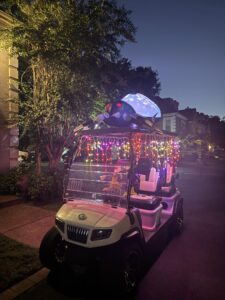
☑️Decorate their EVOLUTION carts for celebrations like Christmas, Halloween, Lunar New Year, or Independence Day. The strings of LED lights, ribbons, or themed decals turning every cart into a moving part of the parade. Decorating carts together — and showing them off in a festive “Cart Parade” — not only sparks creativity but also brings neighbors together in joyful collaboration.
☑️Reduce reliance on cars for short, intra-community trips, thereby allowing more chance for surprise interactions, stops, or detours.
☑️Residents ride together stopping at neighbor houses, gardens, or pop-up snack stands.
☑️Decorate their EVOLUTION carts for celebrations like Christmas, Halloween, Lunar New Year, or Independence Day. The strings of LED lights, ribbons, or themed decals turning every cart into a moving part of the parade. Decorating carts together — and showing them off in a festive “Cart Parade” — not only sparks creativity but also brings neighbors together in joyful collaboration.
cr: Virginia Watson
Because the carts already provide the “vehicle,” drama, novelty, and convenience converge to make participation lower-friction.
Overcoming Potential Objections
Of course, this is not a silver bullet. Some foreseeable concerns and mitigations:
| Concern | Response / Mitigation |
|---|---|
Safety & Regulation |
Ensure carts comply with local road or path rules. Limit speed in pedestrian areas, add turn signals, mirrors, seat belts, and use bright LED lighting for night rides. |
Weather / Climate |
Equip carts with USB fans, and removable enclosure. Encourage early morning or evening rides in hot climates. Seasonal decorations can also make rides enjoyable year-round. |
Battery / Maintenance |
Plan charging stations at community hubs. Use lithium batteries with longer life cycles. Schedule professional maintenance and rotate carts to balance wear and tear. |
Adoption & Culture |
Launch “Try-a-Ride” community days or family ride events. Create photo contests or themed rides to attract attention. |
Environmental Impact |
Highlight that EVOLUTION carts are eco-friendly, battery-powered, and reduce reliance on cars for short trips — cutting emissions and noise pollution. |
Noise or Disturbance |
EVOLUTION carts are quiet, electric, and low-emission, minimizing disruption. Set quiet hours or designate certain routes to avoid sensitive areas. |
|
Privacy & Overcrowding |
Respect boundaries: establish clear times or zones for social rides. Offer “quiet ride” periods alongside social loops for those who prefer calm experiences. |
When thoughtfully deployed, these concerns can be managed.
Over time, residents come to expect and adopt the rides — staying out later, bumping into neighbors they’d otherwise never see, stopping to chat, joining impromptu clusters. Instead of sitting in isolation, people are nudged outward.